

Fourth annual Ag Roundup turns Kentucky State campus into living classroom
Hands-on exhibits, research, and career conversations introduced students to opportunities in agriculture, health, natural resources, and STEM
FRANKFORT, Ky. — A young calf drew students toward a livestock display. Nearby, Kentucky-grown pawpaws, aquaculture systems, drones, and hands-on science showed visitors to Kentucky State University’s fourth annual Ag Roundup that agriculture reaches far beyond the farm.
Held Sept. 24–26, the event welcomed approximately 1,600 middle and high school students from 33 schools across seven counties. They met researchers, farmers, industry representatives, community partners, and Kentucky State students, faculty, and staff as they explored educational and career pathways.
“The Kentucky State Ag Roundup was created to raise awareness of the University’s impact in agriculture and STEM fields across the Commonwealth,” said Dr. Marcus K. Bernard, dean of the College of Agriculture, Health, and Natural Resources and director of Land Grant Programs.
“Ag Roundup has grown by leaps and bounds, and this year’s nearly 50 percent increase in student attendance reflects the expanding partnerships Kentucky State University has developed within the agricultural community and with teachers, administrators, and local FFA chapters across the Commonwealth.”
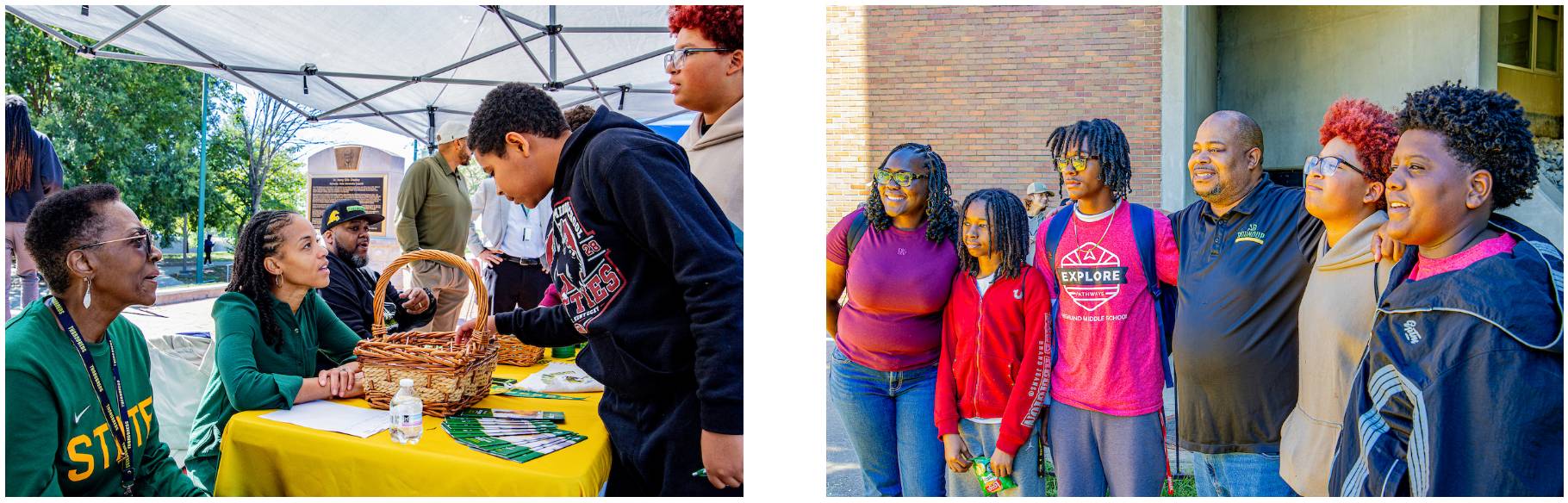
Ag Roundup activities began Thursday, Sept. 24, with the Dean’s Council and an invitation-only Scholars’ Reception. The reception brought together 1890 Scholars, MANRRS students, Kentucky State student leaders, University leadership, sponsors, and partners.
Friday’s symposium drew a packed house to the Carl H. Smith Auditorium in Bradford Hall. Overflow audiences gathered in Little Bradford Auditorium and the Carl McClellan Hill Student Center Ballroom, underscoring the scale of student interest in the program.
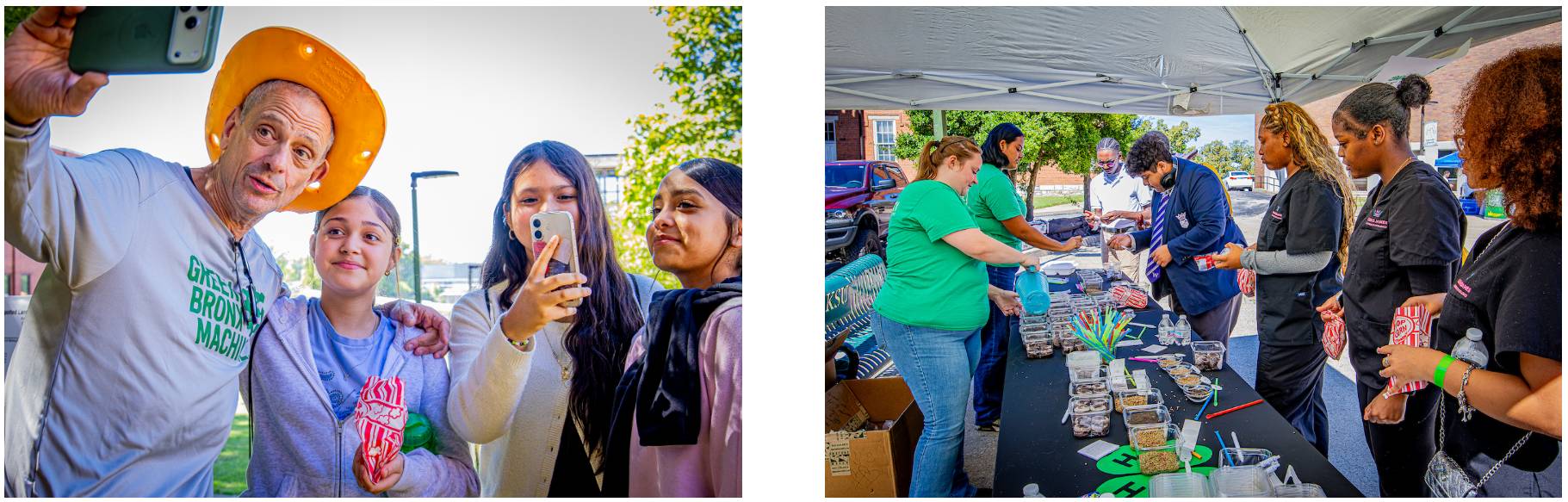
Stephen Ritz, founder of Green Bronx Machine, delivered the keynote address. An internationally recognized educator, author, and urban farmer, Ritz uses food growing and hands-on learning to strengthen academic outcomes, encourage healthier habits, and connect young people with career opportunities. His school-based model, which began in the South Bronx, is now used by schools around the world.
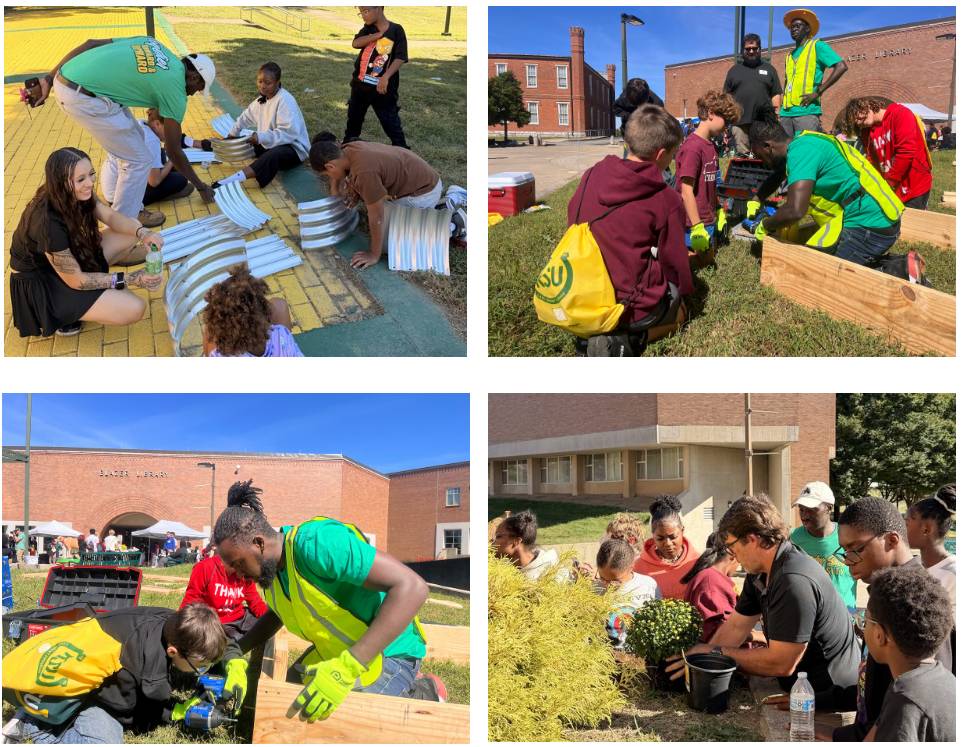
Following the symposium, students traveled the Yellow Brick Road, which extended from the Paul Garrett Blazer Library to the Henry Ellis Cheaney Plaza near the Carl McClellan Hill Student Center. Demonstrations and exhibits gave students opportunities to speak directly with scientists, producers, professionals, and Kentucky State students.
At 4-H Ville, centered near Jackson Hall and the Mary Smith Clock Tower, students moved among activities involving robotics, drones, archery, bike riding, aquaculture, embryology, gardening, nutrition, entomology, podcasting, art, and health.
Throughout the campus, additional exhibits introduced students to geospatial technology, fermentation, pawpaws, pollinators, urban agriculture, soil health, soybeans, ornamental research, animal science, disaster recovery, mobile health, and nursing. A petting zoo, horse and rodeo displays, farmers and vendors, food tents, and student organizations added to the experience.
Spectrum News 1’s coverage of the Ag Roundup highlighted several of the personal encounters that brought the event to life.
A young calf at Henry County farmer David Neville’s display drew students closer and created an opening for broader conversations about farm life and agriculture. At another stop, Dr. Kirk Pomper, professor of horticulture at Kentucky State, introduced students to pawpaw research and discussed the growing interest in understanding where food comes from and how it is produced.
Jaiya McCargo, president of Kentucky State’s MANRRS chapter, and her sister, Jade McCargo, Kentucky State senior class president and chapter vice president, encouraged visiting students to consider the many possibilities within agriculture. The national organization develops leadership and connects students and professionals with opportunities in agriculture, natural resources, and related sciences.
Jade McCargo told Spectrum News 1 that she arrived at Kentucky State knowing little about agriculture, but her experience at the University opened her eyes to the field’s opportunities.
Kentucky State student research posters were displayed in the Rufus Ballard Atwood Research Facility. The presentations allowed students to share their work with visitors and supported professional development through leadership, mentoring, and networking opportunities.
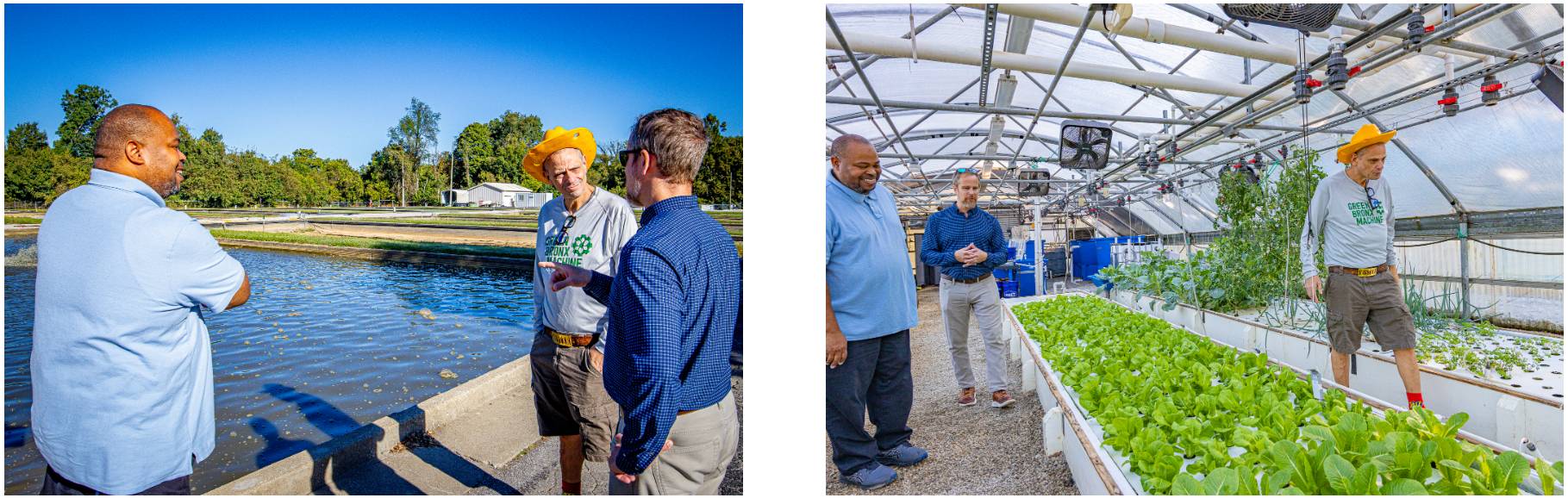
Ritz continued his visit at Kentucky State through Tuesday, meeting with students and faculty and touring the Aquatic Research Center, Kentucky’s only dedicated aquatic research complex. The center anchors more than 40 years of national leadership in aquaculture, supports Kentucky State’s only Program of Distinction, and provides hands-on preparation for students pursuing the Bachelor of Science in Aquatic Science, the first undergraduate degree of its kind in the Commonwealth and one of only a few such programs nationwide. His extended visit connected Green Bronx Machine’s work in food, health, and experiential learning with Kentucky State’s land-grant strengths in research, sustainability, and career preparation.
High schools, academies, and secondary programs from Fayette County included Tates Creek High School, Carter G. Woodson Academy, Frederick Douglass High School, Bryan Station High School, BMW Academy, Locust Trace AgriScience Center, Paul Laurence Dunbar High School, The Learning Center, and Opportunity Middle College.
Jefferson County was represented by Shawnee High School, Central High School, Waggener High School, Western STEM Magnet High School, Grace M. James Academy of Excellence, Minor Daniels Academy, Evangel Christian School, Jeffersontown High School, and W.E.B. DuBois Academy.
Other participating high schools included Hopkinsville High School and New Christian County High School in Christian County; Frankfort High School and Franklin County High School in Franklin County; Henry County High School in Henry County; and Martha Layne Collins High School in Shelby County.
Participating middle schools included Tates Creek Middle School and Winburn Middle School in Fayette County; Western Middle School for the Arts, Olmsted Academy, Highland Middle School, Farnsley Middle School, and Hudson Middle School in Jefferson County; Elkhorn Middle School in Franklin County; and East Jessamine Middle School in Jessamine County.
The event also served as a capstone to Kentucky State’s fall All In for Ag Education Week activities, part of a statewide effort to help students understand where their food comes from and introduce them to agricultural careers.
The 2026 Ag Roundup was supported by sponsoring partners Farm Credit Mid-America; BASF; Keeneland; Kentucky 4-H Foundation; Amplify Horse Racing; Kentucky Department of Agriculture; Kentucky Farm Bureau; Target; Chick-fil-A; USDA Farm Service Agency; DreamFlight Charities; U.S. Army Recruiting Company; and Whiskey Thief Distilling Company.
Learn more about the Kentucky State University Ag Roundup.
Legal Disclaimer:
EIN Presswire provides this news content "as is" without warranty of any kind. We do not accept any responsibility or liability for the accuracy, content, images, videos, licenses, completeness, legality, or reliability of the information contained in this article. If you have any complaints or copyright issues related to this article, kindly contact the author above.
